
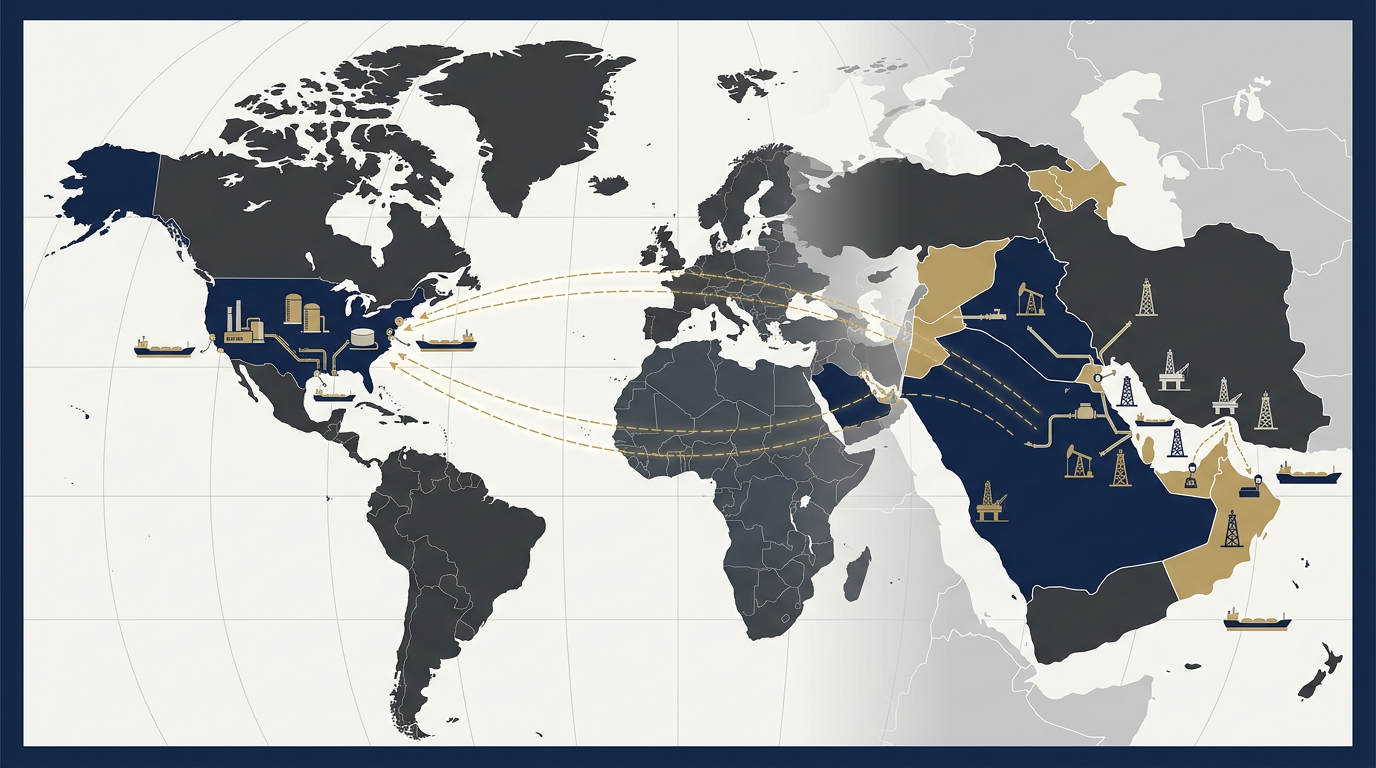
In today’s volatile energy market, oil and gas investing remain a cornerstone of global economic activity—and an enticing, though complex, area for investors. Opportunities abound from exploration wells to mature fields, but so do risks. That’s why successful oil and gas investing hinges on more than optimism or headline trends. It requires data, diligence, and discipline.
Production analysis is at the core of wise decision-making. A production analysis report in oil and gas goes beyond surface-level insights. It deepens into good performance, decline trends, recovery factors, and financial viability. For any investor, whether institutional or independent, this analysis is essential to oil and gas due diligence.
Understanding Oil & Gas Investment Risk
The oil and gas sector offers multiple entry points with distinct risk-reward profiles. Upstream activities involve exploration, drilling, and production, while midstream focuses on transportation and storage infrastructure. Downstream operations handle refining and distributing end products. Investors can gain exposure through direct investments, such as working interests and joint ventures, or indirect vehicles, like energy funds and royalty trusts.
However, every approach carries risks. Commodity prices fluctuate due to global supply-demand dynamics and geopolitical events, affecting profitability. Operational challenges—from equipment failure to dry wells—can disrupt production. Regulatory and legal hurdles may create delays or restrictions, including environmental policies and permitting issues. Additionally, increasing ecological scrutiny and sustainability concerns pose long-term challenges for the industry. Robust risk assessment is essential for investors. Making informed decisions requires thoroughly evaluating technical and financial data to mitigate exposure and enhance investment outcomes.

What Is a Production Analysis Report in Oil and Gas?
A production analysis report is a technical document that evaluates an asset’s historical performance and forecasts future output. It transforms operational data into a financial narrative—telling investors what a field has produced, how it’s likely to behave, and whether it’s economically viable.
Key Components Include:
- Historical production data: Daily/monthly volumes, trends, anomalies
- Decline curve analysis: Modeling how output decreases over time
- Reservoir behavior: Pressure data and recovery efficiency
- Economic modeling: Break-even points, cash flow projections
- Forecasting scenarios: Base case, best case, and downside projections
Who Uses These Reports?
- Institutional investors: To assess asset performance and price entry points
- Financial analysts and consultants: For modeling and valuation
- Petroleum engineers and geologists: For operational planning and optimization
The Role of Production Analysis in Oil and Gas Due Diligence
Production analysis is a critical component of technical due diligence in the oil and gas industry, bridging subsurface data with financial assessments to ensure accurate asset valuation. By meticulously examining historical production data and reservoir characteristics, investors can validate reserve estimates, avoiding overpayment for assets with inflated valuations (Society of Petroleum Engineers). This process enables the projection of future cash flows, allowing investors to anticipate the timing and magnitude of returns. Identifying anomalies such as unusual decline rates or inconsistent good performance may reveal underlying operational challenges that warrant further investigation (ThoughtTrace, Due Diligence in Oil & Gas).
Moreover, production analysis quantifies potential downside risks by modeling scenarios where production underperforms, such as a 20% shortfall, facilitating informed risk mitigation strategies (Texas A&M Engineering, Reservoir Performance Analysis). It also uncovers red flags that might otherwise remain hidden, including inconsistent reservoir pressure data, overly optimistic recovery assumptions, and forecasts lacking support from historical decline trends. Unexplained production downtimes or shortfalls can signal operational inefficiencies that could adversely affect profitability (Society of Petroleum Evaluation Engineers).
By proactively identifying these issues, production analysis strengthens acquisition strategies. It minimizes financial exposure, empowering investors to make well-informed decisions in the oil and gas sector’s complex landscape.
Financial Considerations Anchored in Production Data
Understanding capital and operating costs is crucial in oil and gas investments, with production analysis guiding key financial decisions. Investors assess several core metrics to evaluate project viability:
- Capex, covering drilling, completion, and infrastructure costs
- Opex, representing the recurring expenses of maintaining good operations
- Net Present Value (NPV) to discount future cash flows to present-day dollars
- Internal Rate of Return (IRR) to measure profitability relative to investment costs
- Break-even price, the threshold at which operations become profitable
Beyond these fundamental metrics, scenario planning helps investors navigate financial uncertainty. Stakeholders can better anticipate challenges and optimize investment strategies by testing price sensitivity across forecast models, developing stress-test frameworks, and understanding liquidity needs under different market conditions. A data-driven approach to production analysis ensures that financial risks are identified and proactively managed.
Legal oversight ensures that oil and gas production forecasts align with reality. Even a highly productive well can become a liability if legal complexities are ignored. Certification of mineral rights ownership is essential, as disputes over unclear titles can halt production (American Association of Professional Landmen). Lease obligations, including expiry clauses and unitization requirements, also dictate whether an asset remains economically viable (Society of Petroleum Engineers).

Regulatory compliance is crucial in maintaining operational stability, covering permitting, flaring limits, and reporting mandates. Non-compliance can lead to penalties or shutdowns, affecting cash flow and long-term asset value (U.S. Energy Information Administration). Additionally, litigation risks, such as boundary disputes and surface access issues, may create unforeseen delays, jeopardizing production targets (Rocky Mountain Mineral Law Foundation).
Ignoring these legal factors in production analysis can lead to inaccurate forecasts and increased financial risk. Delays in approvals, regulatory fines, or environmental restrictions—such as emissions caps—can significantly impact expected output (International Energy Agency). Investors must integrate legal, due diligence into their evaluations to mitigate these risks and ensure a more reliable financial outlook.
Opportunities Created Through Production Analysis
While risk mitigation is critical, production analysis also unlocks potential upside.
How it reveals hidden opportunities:
- Underperforming fields: May benefit from workovers or enhanced recovery
- Mature wells: Offer predictable cash flows with lower volatility
- Unrecognized value: Production upside not priced into the market
For portfolio-level decisions:
- Diversify across basins and geologies
- Target low-decline assets to balance high-risk exploration
- Rebalance toward assets with higher recovery efficiency
Production data helps align asset selection with broader portfolio strategy, strengthening the foundation for oil and gas investing decisions.
Challenges and Limitations of Production Analysis
Like any tool, production analysis has its blind spots.
Common limitations include:
- Data gaps: Incomplete historical records or lack of real-time monitoring
- Modeling uncertainty: Reservoir complexity can skew decline forecasts
- External market variables: Prices, inflation, and demand shifts may render forecasts obsolete
Investors must treat production models as guides—not guarantees—and update them regularly with actual performance data.
Best Practices for Using Production Analysis Effectively

Production analysis must be integrated into a broader investment strategy to maximize its value.
Best practices include:
- Work with experts: geologists, engineers, and financial professionals. Experienced investment firms, such as Clarke Energy Fund Management, LLC (CEFM), rely on extensive due diligence, incorporating third-party geophysical assessments to validate opportunities.
- Use the right tools: Advanced modeling software and real-time monitoring platforms.
- Layer in financial and legal due diligence: One without the other creates blind spots
- Monitor and update: Adjust forecasts as actual production data becomes available.
In other words:
“Don’t invest without a Production Analysis and Justification report.”
The Power of Data in Oil & Gas Investments
Production analysis turns wells into numbers—and numbers into informed decisions. It’s the difference between investing on instinct and investing with intelligence. In an industry shaped by uncertainty, production data is not a prediction—it’s preparation.

For those serious about reducing oil and gas investment risk, no decision should proceed without a thorough, technically sound production analysis report. Institutional and private investors, including those engaged in structured oil and gas opportunities like those offered by Clarke Energy Fund Management, LLC (CEFM), recognize that data-driven decision-making is key to long-term success. This isn’t just smart investing—it’s responsible investing.