
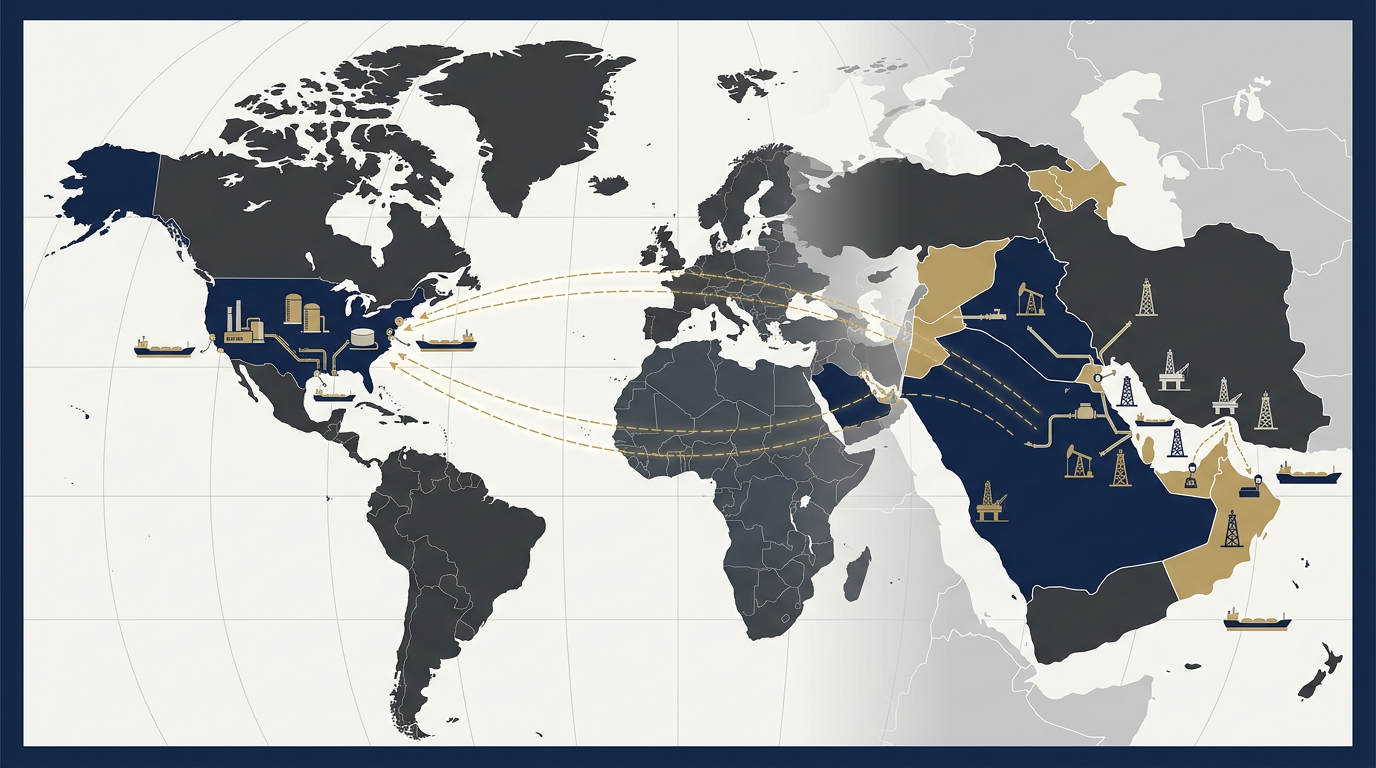
Oil and gas investing has re‑entered the spotlight in 2026 as conflict in the Middle East, shipping disruptions, and shifting supply forecasts create both volatility and opportunity for sophisticated, high‑net‑worth investors. At the same time, domestic U.S. energy production and long‑standing tax advantages of oil and gas investments are drawing renewed attention from accredited investors seeking diversification and tax efficiency.
Why energy investments matter right now
The ongoing U.S.–Israel conflict with Iran has disrupted key shipping routes in the Gulf, including the Strait of Hormuz, through which a significant share of global oil and LNG flows. Dozens to hundreds of tankers have been delayed or rerouted, creating immediate concerns about supply security

and pushing oil prices sharply higher in a short period.
OPEC+ has agreed only a modest output increase of roughly 206,000 barrels per day starting in April, a small fraction of global demand, which does little to offset fears of more serious supply interruptions if maritime routes remain constrained. Analysts and policymakers now openly discuss scenarios in which Brent crude could spike toward or above 100 dollars per barrel if disruptions in Hormuz and surrounding areas persist.
For accredited investors including physicians, business owners, and attorneys, this environment raises a central question: should oil and gas investing play a more intentional role in their overall portfolio and tax strategy, and if so, how?
Geopolitics and the 2026 oil market outlook
Geopolitics is again the primary driver of short‑term oil price risk. The war in Iran has already pushed crude prices up markedly, with some analyses noting moves from the low‑70s to above 100 dollars per barrel within weeks as markets reassessed the likelihood of a prolonged disruption. Regional producers such as Saudi Arabia and the UAE are rerouting exports and, in some cases, can only reach a portion of their prior shipping volumes while conflict risk remains elevated.
Research from major institutions suggests that, under a baseline scenario where the conflict is contained and shipping gradually normalizes, oil prices could spike into the 80–100 dollar range before easing back toward the 70‑dollar area by the end of 2026 as markets adapt. Other forecasters, looking beyond today’s headline risk, still anticipate a structurally “softer” market later in the decade, with global supply capable of outpacing demand growth and Brent averaging closer to 60 dollars in 2026 if oversupply materializes.
For energy investments, this means accredited investors are navigating two overlapping realities: a near‑term environment shaped by war‑driven supply shocks and an intermediate‑term outlook in which new production, efficiency gains, and demand trends could put a cap on prices. This tension is one reason some investors prefer targeted exposure to domestic drilling projects and working interest investments rather than broad, price‑only commodity bets.
Domestic U.S. oil production: strength and constraints
The United States remains the world’s largest crude oil producer, and the Energy Information Administration (EIA) estimates that U.S. crude output reached record levels near 13.6 million barrels per day in 2025. Current EIA forecasts indicate that production in 2026 will remain close to those highs, with only a slight expected decline over the next couple of years as lower prices and fewer rigs gradually work through the system.
 Regionally, the Permian Basin continues to anchor U.S. output, benefiting from high‑quality drilling inventory and relatively low breakeven costs, while Gulf of Mexico offshore production is projected to edge higher as new fields come online. Even if growth slows, U.S. production is expected to hold at historically elevated levels, reinforcing the country’s role as a key source of supply in a world adjusting to conflict‑related bottlenecks in the Middle East.
For investors evaluating domestic oil and gas investing, these dynamics underscore why many are focusing on U.S. working interest investments and participation in domestic drilling projects. Stable rule of law, mature infrastructure, and deep technical expertise can make U.S. basins comparatively attractive versus certain international opportunities that may be more exposed to geopolitical risk or opaque regulatory environments.
Where oil and gas can fit in a diversified portfolio
From a portfolio construction standpoint, direct energy investments can serve several potential roles for accredited investors:
Inflation and geopolitical hedge. Energy prices often respond directly to inflation pressures and geopolitical disruptions, so selective oil and gas exposure may help offset weakness in other asset classes during periods of supply shocks or rising input costs.
Return enhancement. Properly underwritten drilling and exploration projects can offer return profiles that differ from traditional stocks and bonds, especially when based on specific geology, decline curves, and development plans rather than broad commodity speculation.
Diversification across economic scenarios. While some forecasts point to oversupply and lower prices over the medium term, others highlight structural underinvestment in certain regions and the ongoing need for conventional supply even as renewables grow. This dispersion of views creates room for specialized managers and investors to pursue idiosyncratic opportunities.
That said, oil and gas investing also introduces distinct risks, including commodity price volatility, drilling and operational risk, regulatory changes, and potential environmental liabilities. Investors considering working interest investments or non‑operated positions in domestic drilling projects should treat them as high‑risk, illiquid allocations that merit only a defined slice of an overall diversified portfolio.
Understanding tax advantages of oil and gas investing
One of the enduring reasons accredited investors explore oil and gas investments is the potential tax efficiency associated with certain structures under current U.S. law. While specific treatment depends on deal structure and individual circumstances, several concepts are commonly discussed with tax advisors:
Intangible drilling costs (IDCs). Portions of a drilling budget related to labor, fuel, and certain non‑salvageable items are often treated as IDCs, which in many structures can be deductible against ordinary income in the year incurred, subject to applicable rules and limitations.
Tangible equipment depreciation. Physical assets such as casing, tubing, and surface equipment may be eligible for depreciation over a defined schedule, which can create additional non‑cash deductions over time.
Depletion allowances. For producing wells, percentage or cost depletion methods can allow investors to deduct a portion of gross income from the property, again subject to detailed IRS guidelines and caps.
Because these tax advantages of oil and gas investing are highly technical and frequently updated, sophisticated investors typically coordinate closely with their CPA or tax counsel before allocating capital. The net impact of deductions, depreciation, and depletion can materially influence the after‑tax cash flows from working interest investments and domestic drilling projects, but the details must be reviewed in the context of each investor’s broader income, entity structure, and jurisdiction.
Evaluating working interest and domestic drilling opportunities
For accredited investors who decide that direct energy investments may belong in their strategy, the next challenge is evaluating specific opportunities in working interest investments and domestic drilling projects. A few educational considerations often arise in due diligence:
Geology and reservoir quality. Investors should understand the target formation, type curves, decline rates, and how the
 operator’s expectations compare with regional analog wells. Technical reports, offset well data, and independent engineering opinions can be important reference points.
Cost structure and break‑evens. In a world where forecasts range from potential spikes above 100 dollars per barrel in certain conflict scenarios to longer‑term averages closer to 60 dollars, understanding project breakeven prices, capital intensity, and sensitivity to service‑cost inflation is critical.
Regulatory and ESG considerations. Domestic U.S. projects must comply with federal, state, and local environmental and safety regulations, and some investors also evaluate alignment with their own ESG frameworks or policies.
 operator’s expectations compare with regional analog wells. Technical reports, offset well data, and independent engineering opinions can be important reference points.
Because these are private, often non‑traded investments, liquidity is limited and investors should assume a multi‑year holding period, with returns driven primarily by well performance and realized commodity prices rather than mark‑to‑market valuation.
A measured path forward for accredited investors
The combination of a volatile oil market outlook, ongoing geopolitical risk, and high but plateauing U.S. production has created a complex backdrop for energy investments in 2026. For many accredited investors, this is precisely the type of environment where thoughtful, research‑driven allocations to oil and gas investing may complement traditional portfolios—provided the risks, structures, and tax implications are clearly understood.
If you are an accredited investor evaluating how domestic oil and gas investments, including working interest investments in U.S. drilling projects, might fit into your broader diversification and tax strategy, consider engaging with experienced advisors and reputable operators who can walk you through the geology, economics, and risk disclosures in detail. A disciplined, education‑first approach is essential when navigating this evolving energy landscape.
This content is for informational purposes only and does not constitute an offer to sell or solicitation of an offer to buy any security. Investment opportunities referenced may only be available to accredited investors and are subject to additional disclosures and risk considerations.